Quick Answer: Yes, a family dentist can place braces. At East Ridge Family Dental, our dentists provide traditional braces in Owen Sound, so many patients can be treated at the same office they already visit for checkups. Treatment usually follows five steps: an exam with digital imaging, placing the brackets, regular adjustment visits, removal, and a retainer to keep your new smile in place.
Plenty of people start by searching for an orthodontist in Owen Sound. They often don’t know that their own family dental office may already offer orthodontic care. At East Ridge Family Dental on 9th Avenue East, we provide traditional braces in Owen Sound for children, teens, and adults. This guide covers the whole process, from the first exam to the day the brackets come off, so you know what to expect before you commit.
Can a Family Dentist Provide Traditional Braces in Owen Sound?
Yes. In Ontario, general dentists can provide orthodontic treatment, including fixed braces. Our team offers it as part of our regular orthodontic services. That means your braces can be planned by the same dentists who already know your dental history, your fillings, and the health of your gums.
That continuity matters. For example, if a cavity shows up during treatment, you don’t need to book with a different office. Your cleanings, exams, and orthodontic visits can all happen under one roof. We should also be clear about one thing: our dentists are not orthodontic specialists. If your case needs care beyond what we provide, we will tell you so plainly and help you decide what to do next.
Who Are Traditional Braces Best For?
Traditional braces suit a wide range of bite and alignment problems. These include crowding, gaps, crossbites, overbites, and underbites. Because the brackets stay fixed to the teeth, the dentist has steady, precise control over how each tooth moves.
Children and teens are common candidates. A Cochrane review on orthodontic treatment for prominent upper front teeth notes that this problem affects about a quarter of 12-year-olds in the UK. The same review points out that these teeth are more likely to be injured. Adults benefit too, however. Many of our adult patients in Owen Sound and Grey County choose braces to fix crowding that has slowly worsened over the years.
Traditional Braces from Start to Finish: What to Expect
Most patients go through five clear stages. Overall treatment time varies, but it often runs between one and three years, depending on how far your teeth need to move.
Step 1: Your Consultation and Digital Imaging
First, we complete a full dental exam. We also take digital X-rays and photos to see the position of your teeth, roots, and jaw. Before any orthodontic work begins, we check for decay or gum problems, since teeth need a healthy base before they move. Next, we walk you through your options, the expected timeline, and the costs. You can ask as many questions as you like.
Step 2: Placing Your Braces
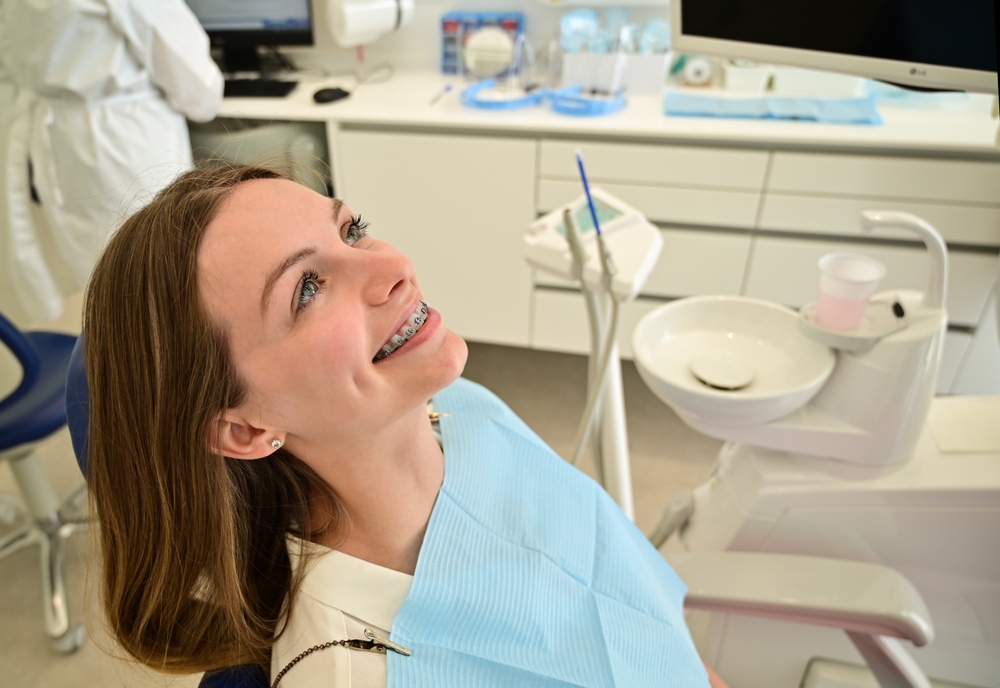
Placement day is usually painless and takes a single appointment. Your dentist cleans and polishes the teeth, then bonds a small bracket to each one with a tooth-coloured adhesive. After that, a thin archwire threads through the brackets and is held in place with small elastic ties. No needles are involved.
Step 3: The First Week
Expect some tenderness for the first few days. Your teeth may feel sore when you chew, and the brackets can rub your cheeks. Fortunately, orthodontic wax and soft foods help a great deal. Most people feel settled within a week.
Step 4: Regular Adjustment Visits
You will return every several weeks for an adjustment. During these short visits, we change the wires or ties to keep your teeth moving in the right direction. Additionally, we check your oral hygiene and spot any areas where plaque is building up. Each adjustment can bring a day or two of mild soreness, which usually fades quickly.
Step 5: Removal and Retainers
Once your teeth reach their planned positions, we remove the brackets and polish away the leftover adhesive. Then comes a step many people underestimate: the retainer. According to a 2023 Cochrane review of retention procedures after treatment with orthodontic braces, teeth tend to relapse toward their original positions without a retention phase. Consequently, we fit you with a fixed or removable retainer and explain exactly how long to wear it.
Daily Life with Braces
Good oral hygiene is the most important habit during treatment. Brackets trap food and plaque, which can lead to white spots, cavities, and inflamed gums. Therefore, brush after meals and use a floss threader or interdental brush to clean around the wire.
Diet matters as well. Hard foods like nuts and ice can break brackets. Similarly, sticky treats such as caramel can pull wires loose. Cut apples and raw carrots into small pieces rather than biting into them whole. If you play hockey or other contact sports, wear a mouthguard designed for braces.
Keep your regular cleanings, too. Professional cleanings during treatment help protect your periodontal health while your teeth are shifting.
How Traditional Braces Compare with Clear Aligners
Both options straighten teeth, and East Ridge Family Dental offers both. The best choice depends on your bite, your lifestyle, and how disciplined you are with a removable appliance.
Traditional braces work around the clock, so results don’t depend on remembering to wear a tray. They also handle complex movements well, such as rotating teeth or correcting significant bite problems. Clear aligners, on the other hand, are nearly invisible and can be removed for meals. However, they only work if you wear them about 22 hours a day. During your consultation, we will tell you honestly which approach fits your case.
Planning for Cost and Coverage
Cost depends on the complexity and length of treatment. We give you a clear estimate before anything begins, so there are no surprises. Many private insurance plans include some orthodontic coverage, especially for children. In addition, our office accepts the Canadian Dental Care Plan (CDCP), so ask our front desk to help you check what your plan covers. The Ontario Dental Association also offers a helpful overview of common dental procedures if you want more background before your visit.
Frequently Asked Questions
Do I need a referral to get braces at East Ridge Family Dental?
No. You can book a consultation with us directly. We will examine your teeth and tell you whether traditional braces suit your needs.
Do braces hurt?
Placing braces does not hurt. However, most people feel soreness for a few days after placement and after each adjustment. Soft foods and over-the-counter pain relief usually help.
Am I too old for traditional braces?
No. Healthy teeth can move at any age. Adults simply need healthy gums and bone first, which we check during your exam.
How long will I wear a retainer?
It varies from person to person. Research shows teeth tend to drift back without retention, so many patients wear a retainer at night over the long term. We will give you a clear plan when your braces come off.
Book Your Braces Consultation in Owen Sound
If you have been searching for an orthodontist in Owen Sound, start with a conversation at your family dental office. Learn more about our traditional braces treatment, or contact East Ridge Family Dental to book a consultation at 695 9th Ave E. We’ll look at your smile, answer your questions, and give you a plan that makes sense for you.
Sources & References
- Orthodontic treatment for prominent upper front teeth (Class II malocclusion) in children and adolescents (Cochrane Database Syst Rev, 2018)
- Retention procedures for stabilising tooth position after treatment with orthodontic braces (Cochrane Database Syst Rev, 2023)
- Ontario Dental Association: Common Dental Procedures